Products

Product Portfolio

Custom robot servo categories for industrial OEM sourcing, from frameless motor components to closed-loop integrated actuators and matching driver boards.

Use this page as a pre-RFQ navigator: pick the product family, capture the correct engineering inputs, and move directly to sample validation criteria that buyers can approve.

How to Select the Right Path

  1. Define required torque at target speed and acceleration profile.
  2. Confirm mechanical interface constraints (shaft, flange, connector).
  3. Choose control architecture (open-loop, closed-loop, driver stack).
  4. Set sample acceptance criteria before quotation freeze.
  5. For heavily loaded joints, run the thermal derating checks before RFQ.
  6. For quadruped and humanoid applications, validate backlash and shock load limits with our engineering team.
Custom Robot Servo robotics servo solution

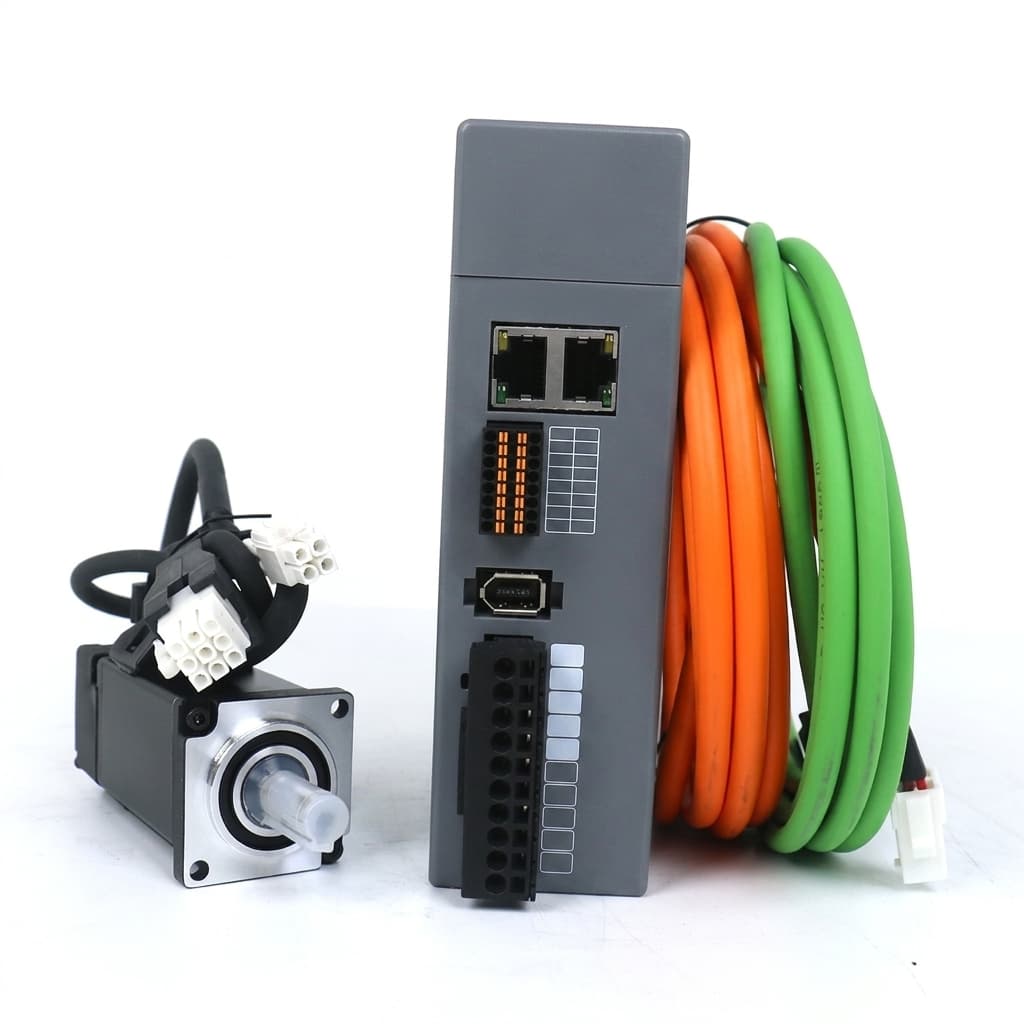
BLDC Servo Drive

Estimate steady operating-point shaft power and average DC bus current from torque, speed, bus voltage, and a user-entered combined motor-and-drive efficiency. Then check separate motor phase-current, duty-cycle, voltage, feedback, and thermal limits against the exact motor and drive documentation.

Robotics hardware engineers, motion-control integrators, and OEM buyers comparing a BLDC motor and servo drive against an application duty cycle.

  • The estimator shows its steady-state power and DC bus-current equations and labels efficiency as a user input, not a product benchmark.
  • The selection guide distinguishes average DC bus current from motor phase RMS current and time-limited peak-current ratings.
  • A system comparison and control-architecture diagram help engineers identify motor, feedback, voltage, communication, and thermal checks.
View details
Custom Robot Servo robotics servo solution

72V Servo Drive

Evaluate 72V servo drives for robotics OEM systems. Compare 72V and 48V DC supply demand, then check the motor, drive, battery, regeneration path, and application-specific safety requirements before an RFQ.

Robotics engineers, systems architects, and hardware developers comparing 48V and 72V drive architectures against measured motor, battery, harness, thermal, and safety requirements.

  • At equal electrical input power, a 72V DC bus draws two-thirds the current of a 48V bus; with unchanged cable resistance, modeled DC cable I²R loss is about 4/9 as high. Motor phase current and total system heat are separate checks.
  • A nominal voltage does not establish touch safety, a standards classification, or compliance. Review the complete voltage envelope, accessible parts, foreseeable faults, and applicable requirements with a qualified safety reviewer.
  • Confirm the battery full-charge voltage, exact drive operating and absolute-maximum limits, overvoltage behavior, and compatible regenerative-energy path. There is no universal MOSFET voltage minimum for every design.
View details
Custom Robot Servo robotics servo solution

60V Servo Drive

Compare pack full-charge voltage and assumed regen rise with the exact drive trip threshold.

Robotics engineers, systems architects, and hardware developers seeking candidates with documented voltage/fault limits and a validated regeneration path for hard deceleration.

  • Compare a pack maker’s maximum charge voltage and an explicitly assumed or measured bus rise with the exact drive trip threshold.
  • Treat voltage-class names as labels; confirm continuous, absolute-maximum, and fault limits in the exact drive manual.
  • Confirm where regenerative energy goes and check BMS, drive, wiring, and machine limits before validation.
View details
Custom Robot Servo robotics servo solution

48V Servo Drive

Estimate 48V DC supply current, compare a 72V alternative, and prepare motor and battery requirements for a drive RFQ.

Robotics OEM engineers evaluating a nominal 48V bus and the tradeoffs of a 72V alternative against measured motor, battery and installation constraints.

  • Budget 48V supply demand at a moving operating point; confirm motor phase current independently.
  • Compare 72V only after checking motor voltage headroom, charging limits and integration cost.
  • Define peak duration, cooling and regenerated-energy handling before selecting a drive.
View details
Custom Robot Servo robotics servo solution

24V Servo Drive

Estimate DC supply current, compare 24V and 48V, and prepare the motor data for a servo drive RFQ.

Robotics OEM engineers comparing a nominal 24V architecture with the actual motor, drive and power-system requirements.

  • Estimate nominal DC supply demand before checking motor phase-current ratings separately.
  • Check the full supply voltage envelope, including sag, full charge and regeneration.
  • Confirm cooling, feedback, communication and protection on the exact drive variant.
View details
Custom robot servo overview

Custom Robot Servo Solutions

Full-stack custom robot servo programs covering servo motors, servo drives, smart servos, integrated actuators, and buyer-specific mechanical-electrical interfaces.

Best for robotics teams that know the motion problem but still need a manufacturing partner to translate it into a motor, drive, or integrated servo package.

  • One RFQ path for motor, drive, actuator, gearbox, encoder, cable, and firmware scope
  • Custom form factors for humanoid joints, grippers, mobile robots, cobots, and special automation
  • Prototype-to-production coordination across mechanical, PCBA, assembly, and test suppliers
View details
Linear servo actuator core

Custom Servo Motors

Custom frameless torque motors, hollow shaft BLDC servo motors, micro servo motors, and encoder-ready motor kits for robot axes with tight size and thermal constraints.

For teams with a restricted envelope or torque-speed target that off-the-shelf motors cannot satisfy.

  • Custom winding, KV, torque constant, insulation, stator stack, rotor magnet, and thermal class options
  • Frameless, housed, hollow-shaft, pancake, and ultra-compact motor layouts
  • Encoder, brake, gearbox, cable, and connector interface coordination
View details
Sealed hollow shaft servo motor concept for harsh robot environments

Harsh Environment Servo Motors

Custom sealed, corrosion-aware, high-temperature, and field-duty servo motor programs for robots that operate outside clean indoor factory assumptions.

For robotics OEM teams whose servo motor fails because the real environment includes moisture, dust, heat, chemicals, vibration, cable strain, or sealed-joint thermal limits.

  • Project-specific review for sealing targets, potting, coating, cable glands, connectors, and corrosion exposure
  • Thermal margin planning with magnet grade, insulation system, winding sensor, and housing heat path considered together
  • Design review for outdoor robots, wash-down adjacent equipment, ROV manipulators, inspection systems, and hot-machine axes
View details
Compact robot servo drive

Custom Servo Drives

Low-voltage custom servo drive boards, micro servo amplifiers, multi-axis control PCBA, and robot-joint embedded drives for BLDC, PMSM, and frameless servo motors.

For robotics teams that cannot fit an industrial cabinet drive into a battery-powered robot or compact joint module.

  • Compact PCB outlines for joint housings, gripper cavities, and mobile robot modules
  • Support for CANopen, CAN FD, EtherCAT, UART, RS485, PWM, and project-specific firmware
  • Thermal, EMC, connector, encoder, braking, and production test planning
View details
Integrated robot servo module

Integrated Robot Servos

Integrated robot servos and smart servo modules combining motor, drive, encoder, gearbox, housing, cabling, and firmware into compact plug-in motion units.

For teams that want a plug-and-play robot servo instead of separately sourcing motor, reducer, encoder, and drive electronics.

  • Motor + drive + encoder + gearbox + housing integration under one manufacturing program
  • Custom torque, speed, ratio, backlash, protocol, cable exit, and mounting pattern options
  • Assembly-level validation for noise, backlash, temperature rise, current draw, and communication stability
View details
Robotic joint servo actuator assembly

Robotic Joint Servo Actuators

Custom robotic joint servo actuators for humanoid, collaborative, inspection, and special-purpose robots that need compact torque density and controlled integration risk.

For hardware teams building joint modules where standard servos are too bulky, too weak, or too hard to integrate.

  • Hollow-shaft, frameless, dual-encoder, brake-ready, and compact joint layouts
  • Integration of motor, reducer, encoder, brake, bearing, housing, drive, and harness
  • Support for torque-density tradeoffs, backlash target, shock load, and thermal path decisions
View details
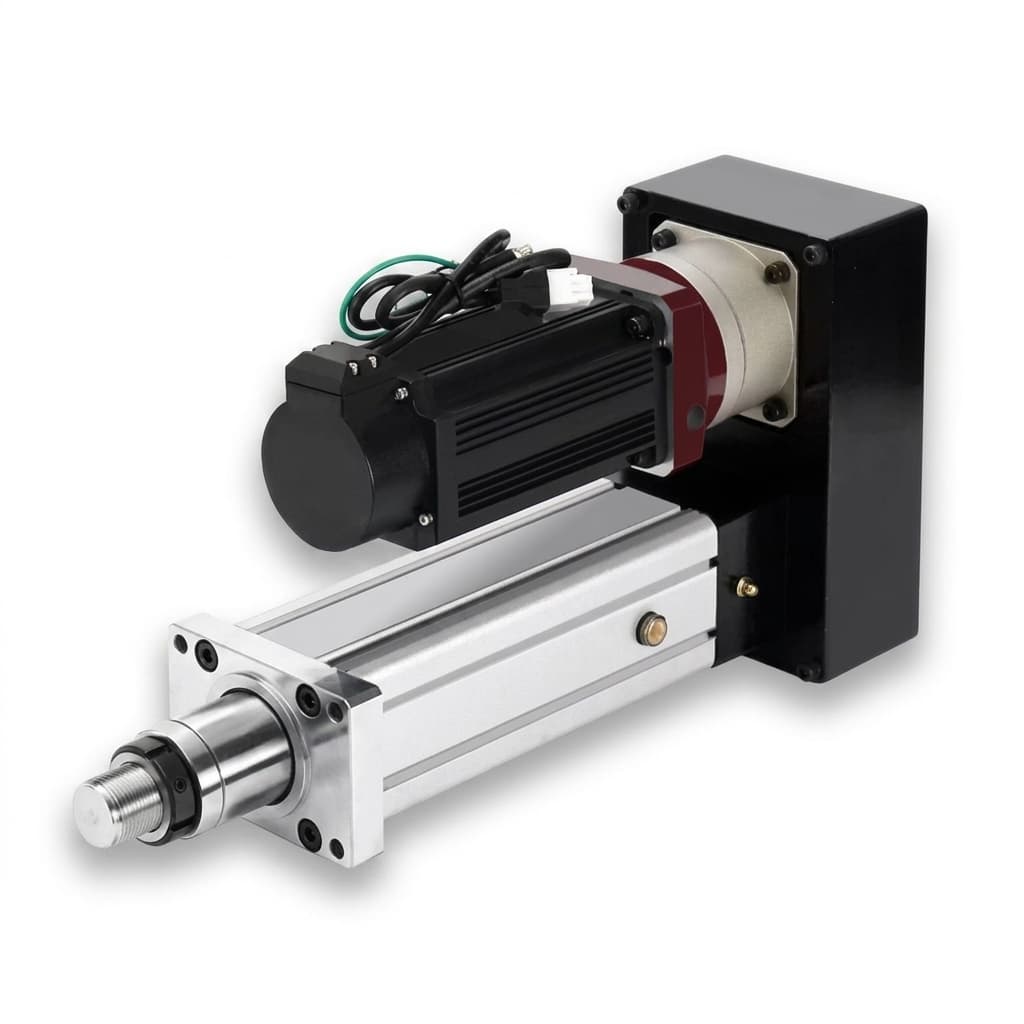
Custom linear joint servo actuator assembly

Linear Joint Servo Actuators

Custom linear joint servo actuator programs combining servo motor, screw transmission, guide interface, sensor feedback, brake, housing, and drive matching for robot axes that push, lift, clamp, or extend.

For teams that need actuator-level axial force and stroke control, not just a rotary motor with a generic screw bolted on later.

  • Servo motor and screw transmission matching for axial force, stroke, speed, backdrivability, backlash, and thermal hold duty
  • Review paths for ball screw, lead screw, planetary roller screw, belt-assisted, and compact guided linear modules
  • Integrated validation for side-load control, anti-rotation, encoder or linear feedback, brake behavior, noise, and end-of-line force testing
View details
Smart servo overview

Smart Servo OEM

OEM smart servo modules with embedded control, feedback, gearbox, firmware commands, and application-specific housing for robot developers and equipment builders.

For buyers who need a custom smart servo product family rather than a one-off catalog hobby servo.

  • Bus servo and smart actuator programs with protocol, firmware, and housing adaptation
  • Custom torque class, gear ratio, connector, cable, mounting, and firmware feature set
  • Production planning for serialized testing, calibration, burn-in, and packaging
View details

Cross-Family Evaluation Snapshot

Product FamilyPrimary Buyer FocusKey MetricWhy It Matters
BLDC Servo DriveRobotics hardware engineers, motion-control integrators, and OEM buyers comparing a BLDC motor and servo drive against an application duty cycle.Average DC bus current at one steady operating point: Estimated from shaft torque, speed, DC bus voltage, and entered combined efficiencyThis is a supply-side estimate. It does not establish motor phase RMS current, drive peak capability, or behavior over a changing duty cycle.
72V Servo DriveRobotics engineers, systems architects, and hardware developers comparing 48V and 72V drive architectures against measured motor, battery, harness, thermal, and safety requirements.DC supply current and wire heating: At equal input power: 2/3 bus current and 4/9 modeled cable I²R loss vs 48VThis assumes the same electrical input power and cable resistance. It does not predict phase current, total system heat, or an approved conductor size; check actual duty, voltage drop, and thermal limits.
60V Servo DriveRobotics engineers, systems architects, and hardware developers seeking candidates with documented voltage/fault limits and a validated regeneration path for hard deceleration.Maximum continuous DC bus voltage: N/A — confirm for the exact drive model.The “60V” label does not establish a continuous input limit.
48V Servo DriveRobotics OEM engineers evaluating a nominal 48V bus and the tradeoffs of a 72V alternative against measured motor, battery and installation constraints.DC supply current: Calculated: 11.84 A at 500 W / 48V / 88%Illustrative moving operating point without design reserve; not a drive phase-current rating.
24V Servo DriveRobotics OEM engineers comparing a nominal 24V architecture with the actual motor, drive and power-system requirements.DC input current: Calculated: 9.80 A at 200 W / 24V / 85%An operating-point supply estimate; it does not specify motor phase current or include design margin.
Custom Robot Servo SolutionsBest for robotics teams that know the motion problem but still need a manufacturing partner to translate it into a motor, drive, or integrated servo package.Servo scope: Motor / drive / smart servo / integrated actuatorThe word servo is broad. Scope clarity prevents quoting the wrong architecture.
Custom Servo MotorsFor teams with a restricted envelope or torque-speed target that off-the-shelf motors cannot satisfy.Motor geometry: Frameless, housed, hollow shaft, pancake, microGeometry determines assembly method, bearing support, and available copper volume.
Harsh Environment Servo MotorsFor robotics OEM teams whose servo motor fails because the real environment includes moisture, dust, heat, chemicals, vibration, cable strain, or sealed-joint thermal limits.Environmental boundary: Indoor protected, outdoor, wash-down adjacent, wet, dusty, hot, corrosive, sealed jointA motor that passes on a bench can fail quickly when water path, dust path, cable strain, or trapped heat is ignored.
Custom Servo DrivesFor robotics teams that cannot fit an industrial cabinet drive into a battery-powered robot or compact joint module.Voltage and current: 12-72 VDC with project-specific phase currentPower-stage sizing is the main driver of heat, cost, board size, and reliability.
Integrated Robot ServosFor teams that want a plug-and-play robot servo instead of separately sourcing motor, reducer, encoder, and drive electronics.Output torque: Micro gripper class to high-torque joint classTorque class drives motor size, reducer selection, housing strength, and thermal design.
Robotic Joint Servo ActuatorsFor hardware teams building joint modules where standard servos are too bulky, too weak, or too hard to integrate.Envelope: Buyer-defined OD, length, bore, and flangeJoint packaging is often the hardest constraint in humanoid and collaborative robots.
Linear Joint Servo ActuatorsFor teams that need actuator-level axial force and stroke control, not just a rotary motor with a generic screw bolted on later.Axial force and stroke: Buyer-defined force, peak force, hold force, stroke, speed, and accelerationLinear joints fail when rotary torque is sized without screw lead, efficiency, holding time, and heat rise considered together.
Smart Servo OEMFor buyers who need a custom smart servo product family rather than a one-off catalog hobby servo.Firmware modes: Position, velocity, torque/current, diagnosticsSmart servo value comes from predictable behavior in the buyer control stack.

Featured Products

A selection of popular custom robot servos and drivers from our product portfolio.

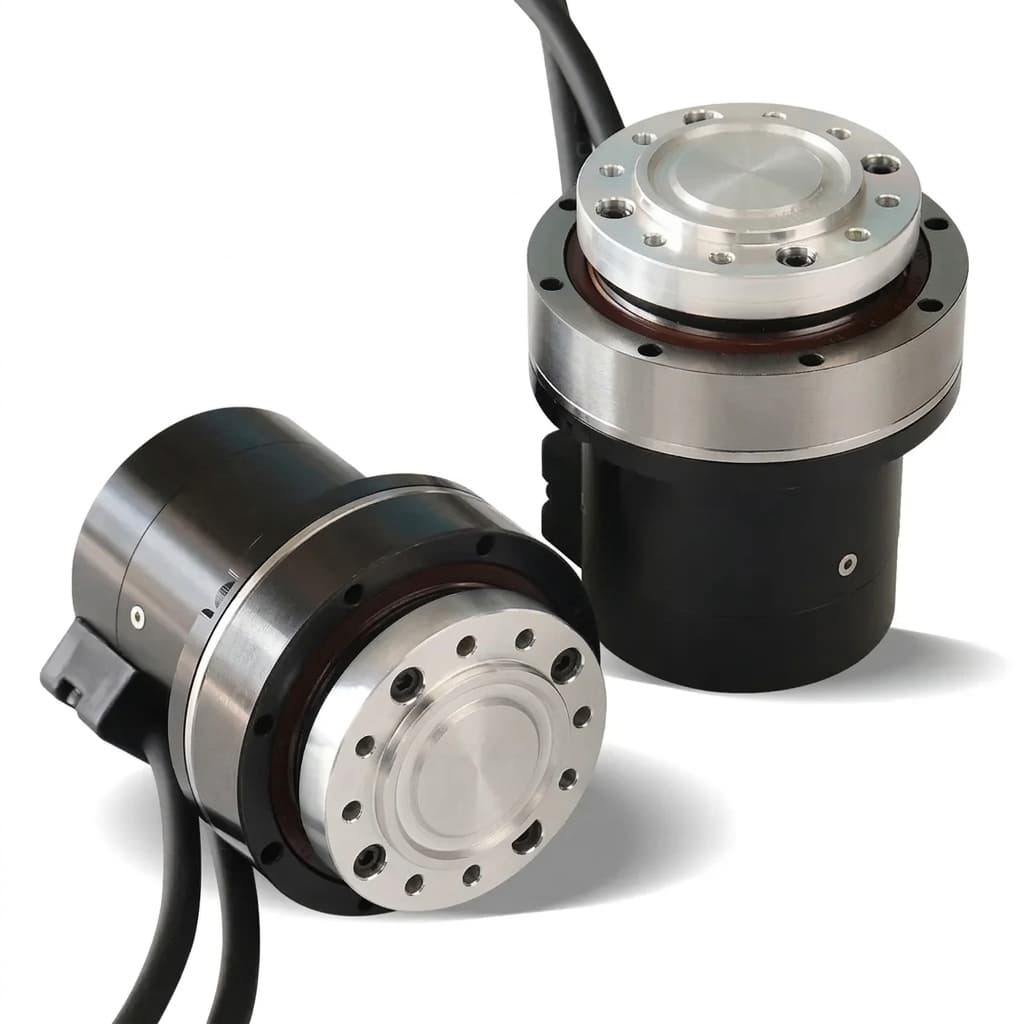
Custom harmonic servo joint kit
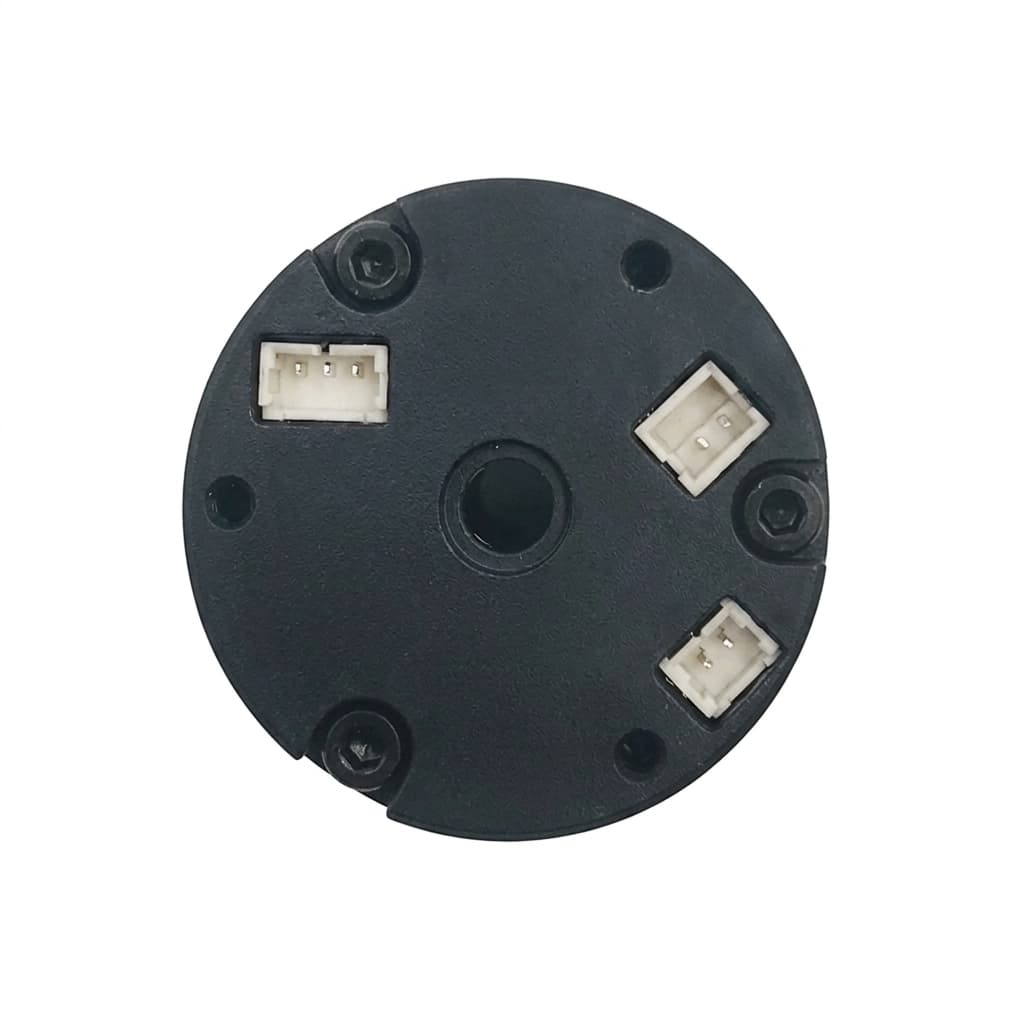
Custom EtherCAT servo drive board
Integrated cycloidal robot servo actuator
Dual axis humanoid servo joint

Inquiry Email

[email protected]

Include drawings, torque/speed, protocol, and prototype quantity.

Instant Chat

WhatsApp Engineering Support

Direct response from our engineering team.