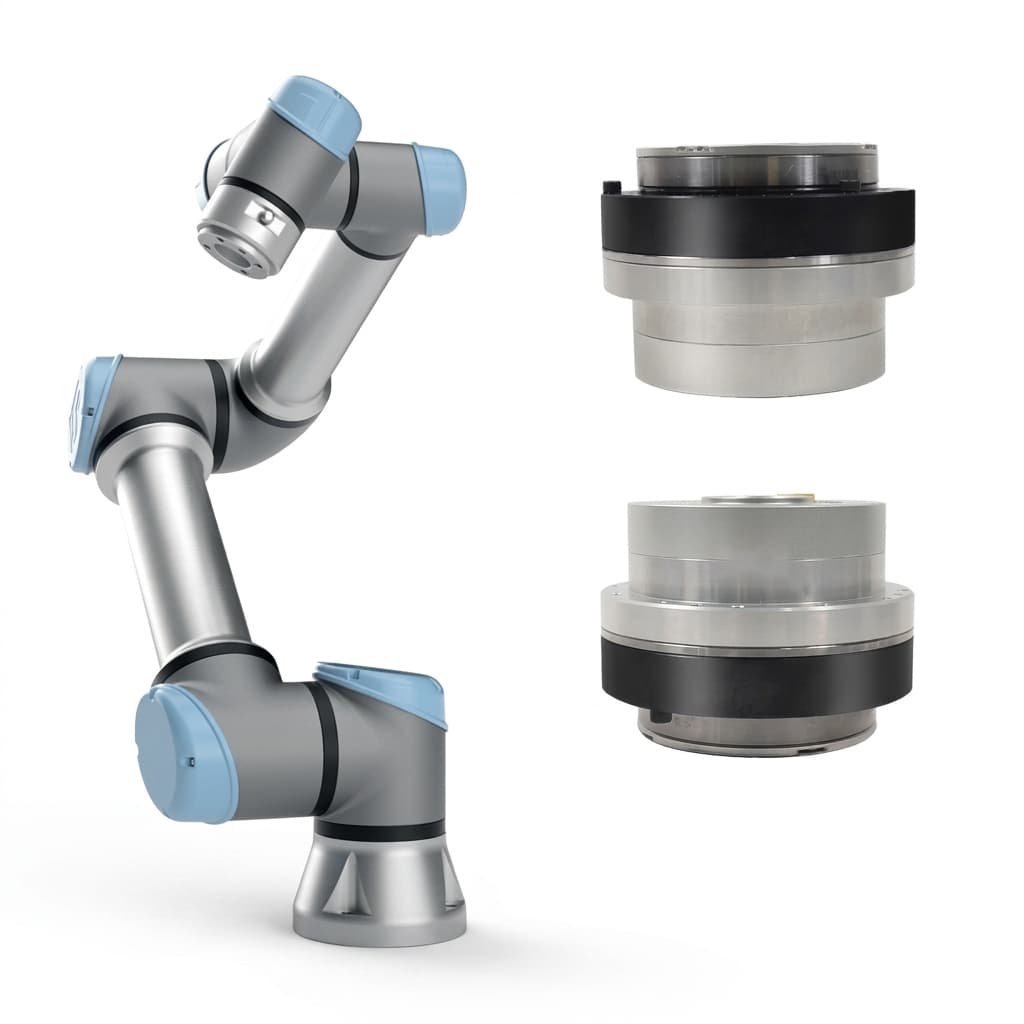
Custom Robot Servo RFQ Guide for Robotics OEM Buyers
How to prepare a useful custom robot servo inquiry across servo motors, servo drives, smart servos, and integrated robotic actuator assemblies. Avoid quote loops and hidden NRE traps.
Executive Summary (TL;DR)
- Asking for a generic 'servo quote' leads to engineering misalignment; always specify if you need a bare motor, motor+encoder, smart servo, or a full-stack integrated actuator.
- A Golden RFQ must define the true mechanical envelope, continuous vs peak torque, voltage bus, and functional safety (STO) requirements.
- The most common sourcing failure is quoting a motor component when the buyer actually needs a validated system with defined End-of-Line (EOL) FAT testing.
For a nominal 24V architecture, use the 24V servo drive current estimator and RFQ checklist to separate supply demand from motor phase-current requirements.
For a nominal 48V battery bus, use the 48V servo drive current estimator and RFQ checklist to compare 48V and 72V supply demand and collect charging, regeneration and motor data before quotation.
Why the Word "Servo" is Dangerous in Procurement
In robotics sourcing, the word "servo" is dangerously ambiguous. A procurement manager asking for a "servo quote" might be looking for a bare frameless motor, while the supplier quotes a fully integrated actuator with a harmonic drive. This misalignment leads to weeks of wasted engineering loops, missed deadlines, and inaccurate budgeting.
A useful RFQ must clearly define the Scope of Supply before asking for a price.
If the project architecture is still open, describe it as a "Full-Stack Custom Robot Servo Program" and explicitly list what you expect the OEM supplier to design, procure, and assemble.
The 4 Tiers of Servo Scope:
- Bare Motor: Stator, rotor, winding, and magnets. (You design the housing, shaft, and encoder).
- Motor + Encoder: Adds the feedback system and commutation alignment.
- Smart Servo: Motor, encoder, and integrated low-voltage servo drive PCBA.
- Integrated Actuator (Full Stack): Smart servo + harmonic/cycloidal reducer + brakes + custom housing.
Understanding this scope is critical. A bare motor might cost $50, but an integrated actuator for a collaborative robot can cost upwards of $800. If you are debating between architectures, you may want to read about the Hidden Costs in Custom Robot Servo OEM Manufacturing.
RFQ Data Completeness and Quote Quality
The quality of the quote you receive is directly proportional to the completeness of your RFQ. Missing data doesn't just mean a delayed response; it often leads to conservative (over-engineered) proposals that destroy your unit economics.
| Missing Data | Consequence | Time Lost | Cost Impact |
|---|---|---|---|
| Mechanical Envelope | Supplier assumes standard catalog frame sizing, forcing redesign later | 2-3 weeks in design iterations | +15% for custom housing modifications |
| Continuous vs Peak Torque | Supplier quotes oversized motor to guarantee peak performance | 1 week back-and-forth | +30% heavier motor, higher BOM cost |
| Thermal Environment Data | Supplier ignores derating; motor overheats in enclosed joint | Discovered late (DVT phase) | Catastrophic failure, redesign required |
| Communication Protocol | Wrong MCU selected; firmware rewrite needed for EtherCAT/CAN | 1 month | Custom PCBA spin required ($5k-$10k NRE) |
| Target BOM Cost | Supplier proposes aerospace-grade components for an AGV budget | Entire RFQ cycle wasted | Project deemed unviable initially |
The "Golden RFQ" Template Checklist
If you want a supplier's engineering team to take your inquiry seriously and prioritize your project, avoid sending a one-line email asking for "a 200W motor catalog."
We recommend building your RFQ around this structured matrix.
Buyer Decision Matrix: Golden RFQ Parameter List
| Category | Parameter | Example Value | Why It Matters | Priority |
|---|---|---|---|---|
| Mechanical | Application & Axis Role | Humanoid knee joint, SCARA Z-axis | Defines shock loads, backdrivability, and precision needs. | MUST |
| Mechanical | Outer Envelope (OD x L) | Ø90mm x 45mm length | Establishes the physical boundaries for stator and housing. | MUST |
| Mechanical | Hollow Shaft (ID) | Ø20mm minimum ID | Needed for routing cables/lasers through the center of the joint. | Should |
| Mechanical | Weight Limit | < 850 grams | Critical for mobile robotics and end-of-arm tooling payload. | Should |
| Electrical | Voltage Bus | 48VDC (Range 42-55V) | Dictates winding design (KV rating) and MOSFET selection. | MUST |
| Electrical | Continuous Torque (Tc) | 5.0 Nm @ 1500 RPM | The torque it can hold indefinitely without thermal breakdown. | MUST |
| Electrical | Peak Torque (Tp) & Time | 15.0 Nm for 3 seconds | Defines overload capacity and drive peak current requirements. | MUST |
| Electrical | Nominal & Max Speed | 1500 RPM / 2000 RPM (No load) | Key for determining back EMF and gear ratios. | MUST |
| Control | Protocol | EtherCAT (CiA402) | Dictates the microcontroller, PHY, and software stack on the drive. | MUST |
| Control | Encoder Resolution | 19-bit optical absolute (Dual) | Defines positioning accuracy and torque ripple compensation. | Should |
| Control | Functional Safety | Safe Torque Off (STO) SIL3 | Requires dual-channel hardware cutoff circuitry on the PCBA. | Nice |
| Validation | Environment / IP Rating | IP65, operating temp -10 to +50°C | Determines sealing strategies, potting, and conformal coating. | Should |
| Commercial | Volumes (EVT/DVT/MP) | 10 pcs / 100 pcs / 5k annual | Drives tooling decisions (e.g., machined vs cast housings). | MUST |
| Commercial | Target BOM Cost | $250 / axis at MP volume | Prevents misaligned proposals and anchors the value engineering. | MUST |
(To understand the core differences in motor technologies when specifying these parameters, see our guide on BLDC vs PMSM in Custom Servo Motors.)
Price Structure Breakdown in Custom Servos
When analyzing quotes for a Custom Robot Servo, it's crucial to understand where the costs are concentrated. A Tier 4 Integrated Actuator is a complex mechatronic assembly.
Common Failure Modes in Servo Sourcing (Real Scenarios)
The most common failure is quoting a component when the buyer needs a system. But the pitfalls go much deeper. Here are real-world failures we've seen from robotics OEMs who didn't properly structure their RFQs.
1. The "Paper Torque" Trap
- Scenario: Buyer specifies 10Nm peak torque. Supplier quotes a motor that achieves 10Nm on a dynamometer. In the robot, the motor melts after 5 minutes.
- Root Cause: The RFQ did not specify the duty cycle or the thermal environment. The motor was tested on a massive aluminum fixture (infinite heatsink) but installed in a thermally insulating 3D-printed plastic robot arm.
- How to Prevent: Provide continuous/peak torque profiles alongside thermal boundary conditions (e.g., "enclosed in carbon fiber tube, max ambient 40°C").
- Cost of Failure: Complete motor redesign; 3-month schedule slip.
2. The Current Limit Bottleneck
- Scenario: The motor is perfectly sized, but it fails to accelerate the robot arm fast enough.
- Root Cause: The buyer sourced the motor and the servo drive separately. The motor needs 45A peak to achieve required torque, but the chosen drive limits at 30A.
- How to Prevent: Request integrated Smart Servos or have one supplier validate the matched Motor+Drive pair.
- Cost of Failure: Upgrading to a higher-current drive, usually requiring a larger physical footprint.
3. Missing End-of-Line (EOL) Testing Ownership
- Scenario: Fully assembled actuators arrive, but 20% have unacceptable cogging torque and gear backlash.
- Root Cause: The supplier was contracted to "assemble parts," not to validate system performance. No Factory Acceptance Test (FAT) was defined in the RFQ.
- How to Prevent: Explicitly define EOL test criteria (e.g., "100% test for backlash < 1 arcmin, cogging < 1% nominal torque").
- Cost of Failure: Sorting, rework, and returned merchandise authorizations (RMAs).
4. EMI Nightmare in Dual Encoder Setups
- Scenario: The robot experiences erratic joint jittering only when high torque is applied.
- Root Cause: High PWM switching frequencies from the motor phases induced EMI into the unshielded absolute encoder lines running parallel through the hollow bore.
- How to Prevent: Specify routing requirements and EMI testing in the RFQ. Choose suppliers with mechatronic experience, not just motor winders.
- Cost of Failure: Redesign of cabling harnesses and PCBA layout spins.
5. Unspecified Backdrivability
- Scenario: A collaborative robot arm is too stiff for the user to manually teach waypoints by physically moving it.
- Root Cause: The RFQ specified the reduction ratio (100:1) but failed to specify maximum starting friction or backdriving torque.
- How to Prevent: Include kinematic user-experience requirements (e.g., "Must be backdrivable with < 2Nm applied force").
- Cost of Failure: Scrapping the chosen reducer technology for a different architecture.
6. The "We Need It Fast" Compromise
- Scenario: An OEM needs custom servos in 4 weeks. The supplier modifies a stock motor, taking shortcuts on potting and strain relief to meet the deadline. Field failures occur due to vibration.
- Root Cause: Rushing the EVT phase without defining ruggedization standards.
- How to Prevent: Distinguish between EVT (speed is king) and DVT (reliability is king).
- Cost of Failure: Field recalls and brand damage.
Timeline Expectations
Developing a custom robot servo is not a next-day catalog purchase. Understanding the typical hardware development lifecycle ensures your procurement timeline aligns with reality.
| Phase | Description | Simple Modification (e.g. custom winding) | Custom Smart Servo | Full Integrated Actuator |
|---|---|---|---|---|
| Quote & Architecture | RFQ review, DFM feedback, Proposal generation | 1-2 Weeks | 2-3 Weeks | 3-4 Weeks |
| EVT (Engineering Verification) | Alpha prototypes. Proof of concept, functional testing | 4-6 Weeks | 8-10 Weeks | 10-14 Weeks |
| DVT (Design Verification) | Beta prototypes. Reliability, thermal, EMC testing, tooling kickoff | 4-6 Weeks | 8-12 Weeks | 12-16 Weeks |
| PVT (Production Verification) | Pilot run, yield analysis, EOL test fixture validation | 3-4 Weeks | 4-6 Weeks | 6-8 Weeks |
| MP (Mass Production) | Steady state manufacturing lead time | 6-8 Weeks | 8-10 Weeks | 10-12 Weeks |
Note: Timelines assume active and decisive communication between buyer and supplier.
Supplier Evaluation Checklist
Not all motor manufacturers are equipped to build robotic servos. When auditing potential OEM manufacturing partners, use this checklist to gauge their capabilities:
- Cross-Functional Engineering: Do they have in-house motor electromagnetic designers, PCBA hardware engineers, and embedded firmware developers?
- Prototyping Speed: Do they have rapid prototyping capabilities (in-house CNC, 3D printing, quick-turn winding) for EVT units?
- Test & Validation Equipment: Can they provide dynamometer reports? Do they have environmental chambers and EMC pre-compliance tools?
- Quality Certifications: ISO 9001 is a minimum. IATF 16949 or ISO 13485 (Medical) are strong indicators of robust process control.
- Supply Chain Transparency: Will they disclose the source of their reducers and critical ICs?
- EOL Testing Capability: Do they design and build custom end-of-line functional test fixtures for production?
The Faster Quote Path: Start Your Engineering RFQ
For a fast and highly actionable response, skip the back-and-forth emails and use our structured engineering RFQ process. We immediately route your mechanical, electrical, and commercial constraints to the correct cross-functional team (motor design, PCBA layout, and mechanical assembly).
Inquiry Email
Include drawings, torque/speed, protocol, and prototype quantity.
Author

Categories
More Posts
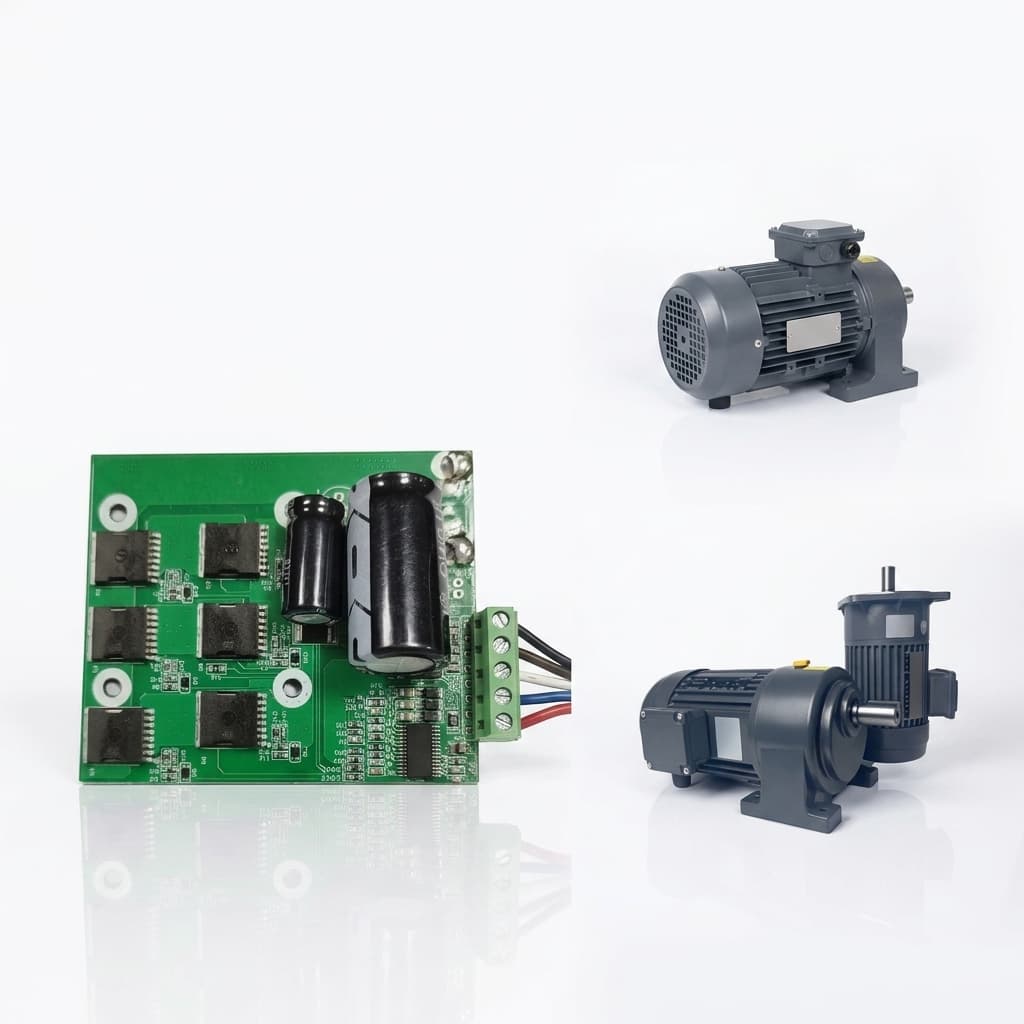
The Physics of Thermal Derating in Robot Servos: Beyond the Datasheet
Why datasheet peak torque is a trap, and how thermal derating, motor constants (Km), thermal resistance (Rth), and potting define real robot performance.
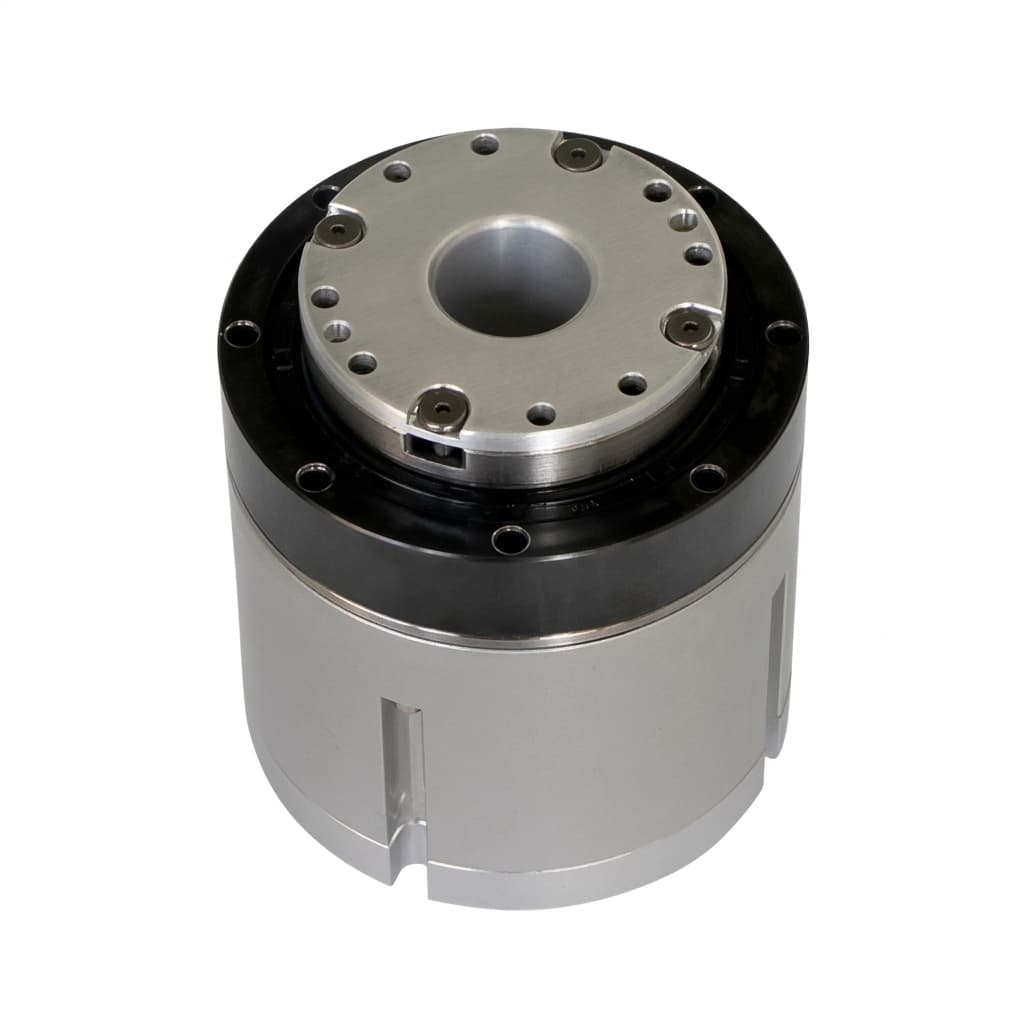
Unboxing the Backlash Blackbox: Harmonic vs Cycloidal vs Planetary for Robotic Joints
A deep engineering guide to choosing between Harmonic, Cycloidal, and Planetary reducers for custom robotic joints to manage backlash, rigidity, and shock loads.
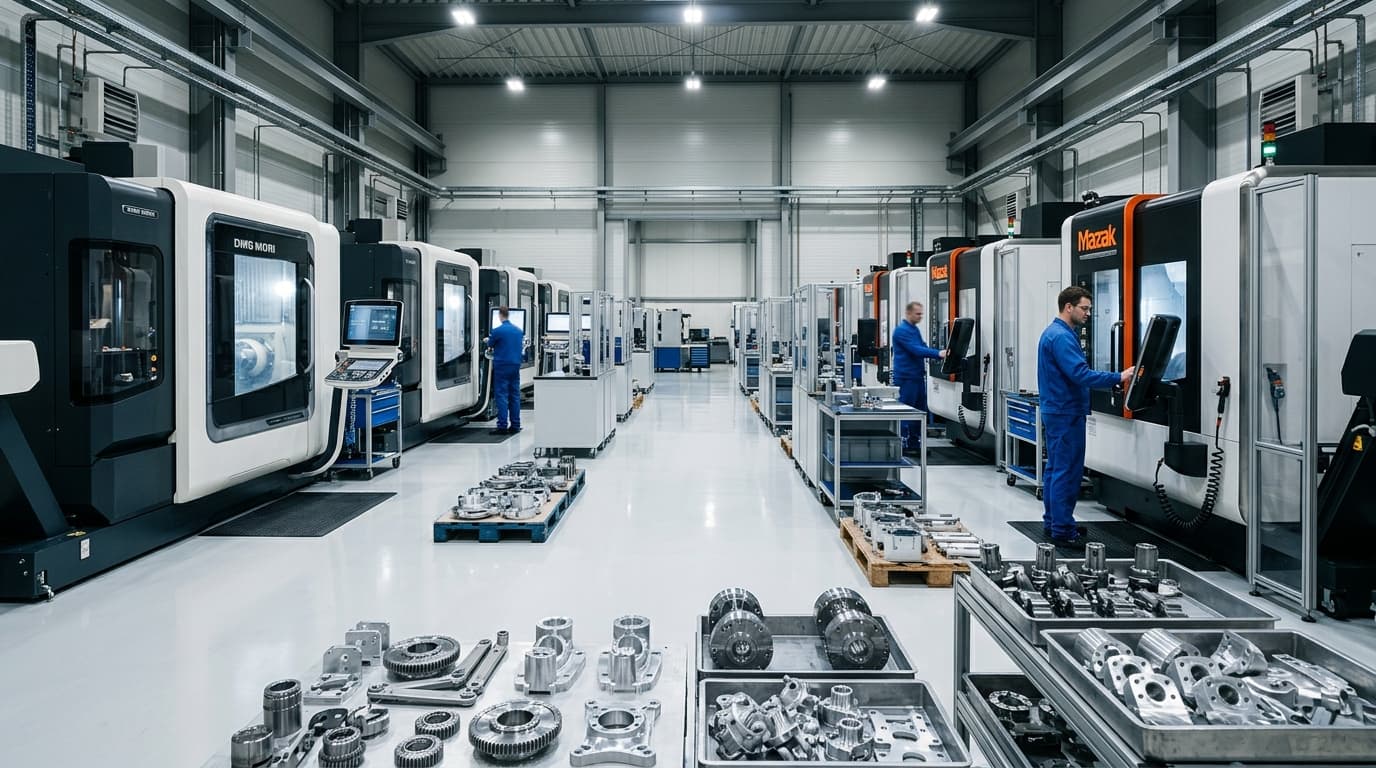
The Hidden Costs in Custom Robot Servo OEM Manufacturing
A transparent breakdown of tooling, NRE, PCBA, and supply chain costs when scaling custom robotic joints from prototype to mass production.